Tasks, not titles: Scott Morrison on how AI is reshaping hiring
How AI is reshaping hiring, workforce planning, and the way companies develop talent.
Watch the full conversation above, or listen to the episode on the CanadianSME Small Business Podcast.
For most of the history of hiring, a CV has been an act of faith. A role opens, someone writes a description, and a filter searches for the degrees, certifications and years of experience that we hope add up to the skills the work needs. If the keywords match, the candidate moves forward. Whether they can actually do the work is something we find out later.
Scott Morrison, Global Head of People at Beamery, thinks that starting point is the problem. On a recent episode of the CanadianSME, he told host Maheen Bari that the thing leaders should plan around is not the job. It is the task.
"It's not about replacing a person, it's about exponentially growing your capability to do more work in less time."
A job title is a wall around your skills
"When you look at it from a job perspective, you're putting almost an unnatural wall around your bank of skills," Scott said.
A title tells you which box a person sits in. It says little about what they do all week, and less about what they could do next. Leaders still need to fill roles. But what the business actually needs is a set of tasks done well, and confidence that the person doing them has the skills to do so. Skills are claimed. Tasks are proven.
Seen this way, AI stops being a question of which jobs disappear. You don't automate a job, you automate the tasks inside it. Some tasks no longer need a person. The time that comes back belongs to someone, and the useful question is what they do with it.
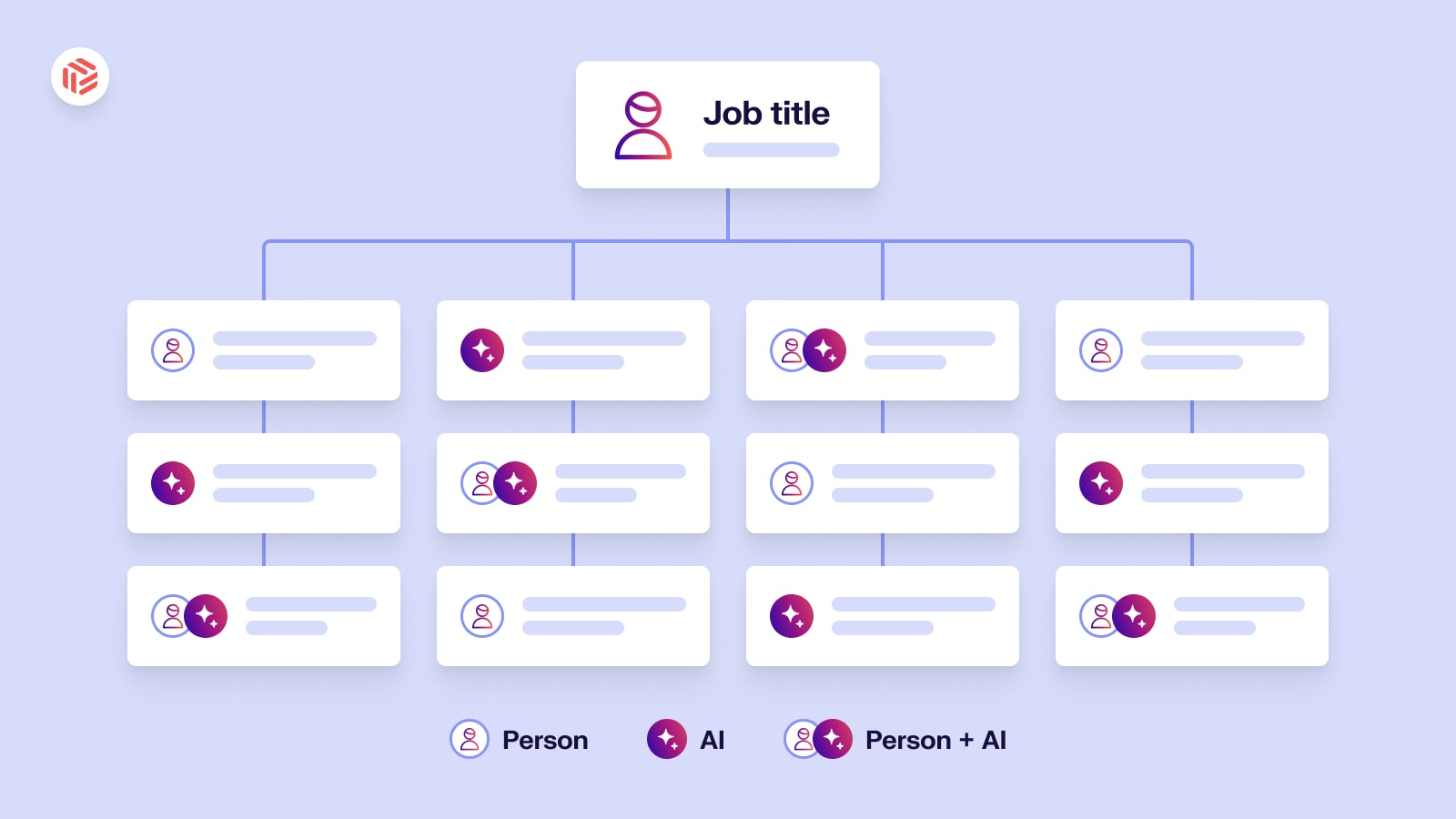
You don't automate a job with AI, you automate the tasks inside it.
The cheapest talent search is a one-on-one
Imagine a manager with 20 people. They know everyone's title and roughly what each team delivers. What they don't know is that one analyst used to run supplier negotiations at a previous company, or that a coordinator has spent a year quietly teaching herself data work in the evenings.
"They're not going to innately know every single thing that every person in their group is going to be doing on a day-to-day basis," - Scott Morrison
His answer isn't a new system. It's a better conversation: regular one-on-ones about what someone does today, what they want to do next, and what they have done before that could take them somewhere new. "It's really those elements, where you're taking the time to understand your whole employee instead of just their current job, that's going to be able to make it so that you're able to retain the talent that you need and also grow your talent from within."
The return, in his words, shows up as lower turnover, lower recruitment costs and less time with a role sitting empty.
Hire, upskill or redesign
Scott starts with the business strategy over the next three, five or ten years, and then a skills inventory: what the business has now, and whether those are the skills and tasks it will need. "It's not a secret recipe, though," he said. "These are principles that can be used at an organization that has five employees or an organization that has 25,000 employees."
Imagine a 40-person distribution business that plans to grow into a new region. Before opening a single role, its leaders list the tasks that growth will need and the skills their people already have. Some of those tasks are new and nobody does them today. That's a hire. Some are a stretch for someone who has already asked for more responsibility. That's upskilling. And some can be absorbed because AI now handles the order reconciliation that used to eat an operations coordinator's Friday afternoons. That's a redesign.
Scott thinks the last two are underrated. "If you cut off the growth, then an employee is going to stop being happy with where they are. They really do want to continue to grow."
Beamery shows the work behind the plan: every role broken into its tasks and the skills each one needs, which tasks AI could take on, and who can do the work ahead. See where Beamery fits. Or start with a free skills and task assessment of up to six of your roles, from job descriptions alone.
AI for AI's sake is expensive
"AI for AI's sake is going to be a very costly endeavor," Scott said. "It's not a silver bullet."
Before rolling anything out, he suggests three things. Decide what you want AI to achieve. Know where your customers and your employees are, because the rules differ by US state, by country in Europe, under the EU AI Act and in Canada. And train people, because bad habits with AI tools cost real money. "You don't want to set your employees up to really violate any legislation or regulations when they didn't know."
The human part doesn't move
AI can read a year of one-on-one notes faster than any manager. It can surface patterns, prepare a review and remind you what someone said they wanted six months ago.
"What it's not able to do, though, is provide that feedback to the employee and to create that connection with the employee," Scott said. "When you have that connection, and you have managers that are engaged with employees and employees that are engaged with your company, you're never going to lose that human center."
Businesses that understand their work at the level of the task, and know who can do it, will be in a better position as AI takes on more of that work. The people stay at the centre. They give the feedback, make the calls and build the trust that no model can.
Thank you to Maheen Bari and the team at CanadianSME Small Business Magazine for having Scott on the show.
Watch the full episode, get your free skills and task assessment, or see where Beamery fits.